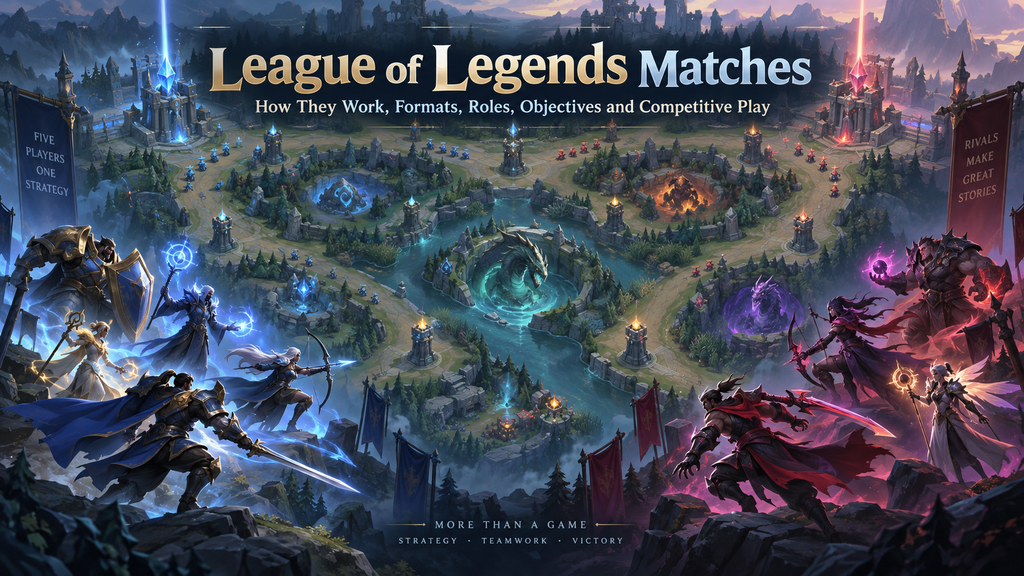
League of Legends matches can look chaotic to new viewers. Ten players move around the map. Each champion has different abilities. Objectives appear at set times. Fights can start very fast. But the main goal is simple. Two teams of five fight for map control and resources. They destroy enemy structures and try to reach the Nexus. Once you know this, the game is easier to understand. It also explains why people interested in professional esports, match analysis, or topics such as league of legends betting usually pay attention to much more than the final kill count. Gold, objectives, team setup, map position, and timing can show more than kills. Casual, ranked, and pro games use the same basic rules. Pro matches are more organized. Teams plan around objectives, talk often, and use drafts and map movement with more structure.
What Is a League of Legends Match?
A standard League of Legends match takes place on Summoner’s Rift. Two teams of five start on opposite sides of the map. Each player controls one champion. Every champion has different skills, strengths, weaknesses, and roles. Players earn gold and experience during the match. They buy items, grow stronger, and fight for control of key areas. The main goal is to break through the enemy base.
The Basic Match Structure
Summoner’s Rift has three lanes: top, mid, and bot. The jungle sits between them. It has neutral monsters and major objectives. Most teams start with one player top, one mid, two bot, and one in the jungle. This can change later. Players earn gold and experience from minions, monsters, champions, and structures. They use these resources to level up and buy better items. As the match goes on, teams group more often around towers, Dragons, Baron Nashor, and other key objectives.
The Main Objective
The main goal is not to get the most kills. A team wins by destroying the enemy Nexus. The Nexus is inside the base. Towers and inhibitors protect it. Teams need to break through these defenses. Kills can help by removing enemies for a short time and giving gold. But kills matter most because of what comes next. After a good fight, a team may take a tower, Dragon, Baron, inhibitor, or the Nexus.
How Long Does a Match Usually Last?
Match length can vary a lot. Some games end fast when one team gets a big early lead. Others last much longer because both teams defend well. Pro matches can also look slower. Teams often avoid risky fights. Instead, they prepare vision, manage minion waves, and move into position for the next objective.
How a League of Legends Match Begins
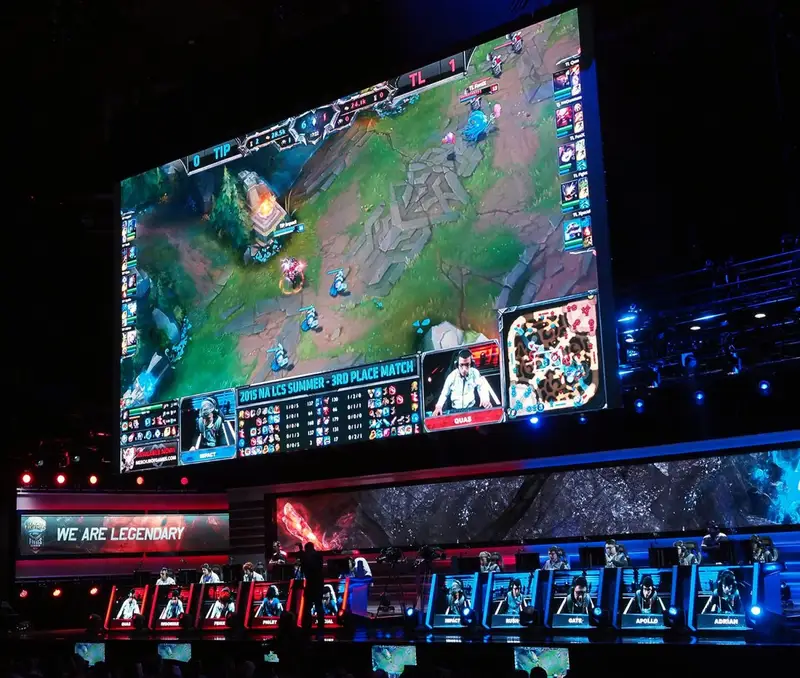
The match effectively starts before champions enter Summoner’s Rift. Champion selection can influence how both teams expect the game to develop.
Champion Select
During champion select, players pick champions and can ban some choices. A good team needs damage, defense, crowd control, and support. Some teams are strong early. Others become stronger later. Champion picks also shape lane matchups. A player may choose a champion that works well against an opponent or fits the team plan. In professional games, drafting is very important. Teams often prepare champion combinations before the match.
Starting Items and Early Setup
Once the game begins, players buy starting items and move onto the map. Players may go straight to their lanes. They may guard jungle entrances or place early vision. Some teams may invade the enemy jungle. These early moves can show parts of a team’s plan before minions reach the lanes.
The First Minutes of the Match
The early game focuses heavily on farming, lane control, jungle routes, and small skirmishes. Players try to collect minions efficiently while denying opportunities to their opponents. Junglers move between camps and may enter lanes to create numerical advantages. Early kills can matter, but losing control of minion waves or important objectives can be just as significant.
The Five Main Roles in League of Legends Matches
Each team normally has five distinct roles. Their responsibilities overlap, but each role generally focuses on different parts of the map.
Top Lane
Top lane is often separate from the rest of the map early in the game. Top champions can be tanks, fighters, or duelists. Some focus on side-lane pressure. Others help lead team fights. Their main jobs are to survive lane, create pressure, and support the team later.
Jungle
The jungler moves through neutral areas rather than staying in one lane. Junglers clear camps for gold and experience. They also help control the map. They can gank lanes, secure objectives, place vision, and support teammates. Smite makes them especially important during Dragon and Baron fights.
Mid Lane
Mid lane sits in the center of the map. This gives mid players relatively easy access to both side lanes, the jungle, and major objectives. Mid-lane champions may specialize in burst damage, control, mobility, or sustained damage. Strong wave control allows them to leave the lane and help teammates elsewhere.
AD Carry
The AD Carry, often called ADC, usually plays in bot lane alongside the support. ADCs are commonly ranged champions that become stronger as they gain items. Many provide high sustained damage later in the match. Their strength often comes with a weakness: they can be vulnerable if caught out of position. Positioning is therefore especially important during team fights.
Support
The support begins in bot lane but often becomes increasingly active across the entire map. Supports help protect teammates, start fights, control vision, and provide utility. Some specialize in engaging, while others focus on healing, shielding, or protecting carries. Their contribution is often difficult to measure through raw damage statistics alone.
The Main Phases of a League of Legends Match
League of Legends matches are commonly divided into early, mid, and late game. These phases are not separated by exact times, but they help explain how priorities change.
Early Game
The early game is about farming, laning, and small fights. Players usually stay in their own areas. Junglers look for chances to gank. Laners try to control minions and pressure their opponents. Early objectives can give a team an advantage. But teams must decide if fighting for them is worth the risk.
Mid Game
The mid game begins as outer towers fall and players start moving around the map more freely. Teams rotate between lanes, contest neutral objectives, and try to create favorable fights. This stage often involves more strategic decisions. Teams may trade one objective for another, pressure a side lane, or use vision to catch isolated opponents.
Late Game
The late game becomes more dangerous because death timers are longer and champions have completed more items. A single mistake may allow the opposing team to take Baron, destroy multiple towers, or end the match. Positioning and coordination become especially important. Even a team with a gold advantage can lose control after one poor fight.
Important Objectives in League of Legends Matches
Objectives shape the flow of a match. They provide gold, permanent advantages, temporary buffs, or direct pressure on enemy structures.
Turrets
Turrets protect lanes and bases. Destroying them provides gold and opens more of the map. Once an outer tower falls, the attacking team can move more freely into enemy territory. Tower pressure also forces opponents to respond, which can create opportunities elsewhere.
Dragons
Dragons provide team-wide advantages. Different Dragons give different benefits. Dragons become more important as the match goes on. Teams often prepare before one appears. They clear vision, push nearby lanes, and move players into position.
Rift Objectives
Other neutral objectives can help teams create pressure earlier in the game. These objectives are often used to accelerate tower damage or create additional map control. Their value depends on timing, team strategy, and the current game state.
Baron Nashor
Baron Nashor is one of the most important objectives in the later stages of a match. Defeating Baron provides a powerful temporary buff that helps teams push lanes and strengthen nearby minions. Baron can turn a small lead into major map pressure. It can also create dramatic comeback opportunities if the team that is behind manages to steal it.
Inhibitors
Inhibitors sit inside each base behind inner defenses. When an inhibitor is destroyed, stronger minions begin appearing in that lane. This creates constant pressure and forces the defending team to spend time clearing waves.
Gold, Experience and Item Progression
League of Legends is heavily influenced by resource management. A team with more gold and experience is usually stronger. But it still needs to turn that lead into objectives.
How Players Earn Gold
Players earn gold from minions, jungle monsters, kills, assists, towers, and other objectives. Farming is especially important because minions provide a steady source of income throughout the match. A player with fewer kills can still be stronger than an opponent if they have collected significantly more farm.
Why Experience Matters
Experience increases champion levels. Higher levels improve base statistics and allow players to upgrade abilities. A level advantage can be significant during lane fights or objective contests, particularly when it unlocks an important ability before the opponent has access to theirs.
Item Power Spikes
Champions get stronger when they finish key items. An item can add more damage, defense, speed, or useful effects. This is called a power spike. Good teams try to fight when they are stronger. They also avoid risky fights when the enemy has the advantage.
How Teams Build an Advantage
Winning in League of Legends is not only about mechanical skill. Teams also create advantages through map management, timing, and information.
Lane Pressure
Lane pressure comes from controlling minion waves and forcing the opponent to respond. A pushed lane can give a team time to move toward an objective before the enemy arrives. It can also force defenders to choose between protecting a tower and helping teammates elsewhere.
Vision Control
Fog of war hides areas of the map that players cannot currently see. Wards provide vision and information about enemy movement. Controlling vision allows a team to move more safely, prepare ambushes, and make better decisions around objectives. Removing enemy vision can be just as important as placing your own.
Objective Trading
Teams do not need to contest every objective. Sometimes one side may deliberately give up Dragon in exchange for towers or pressure on the opposite side of the map. This is known as objective trading. The value of a trade depends on timing, map position, and what each team gains.
Tempo
Tempo refers to the ability to act first. A team may gain tempo by pushing a wave quickly, returning to base earlier, or forcing an opponent to respond. Even small timing advantages can allow one side to reach an objective first and establish better positioning.
Team Fights in League of Legends Matches
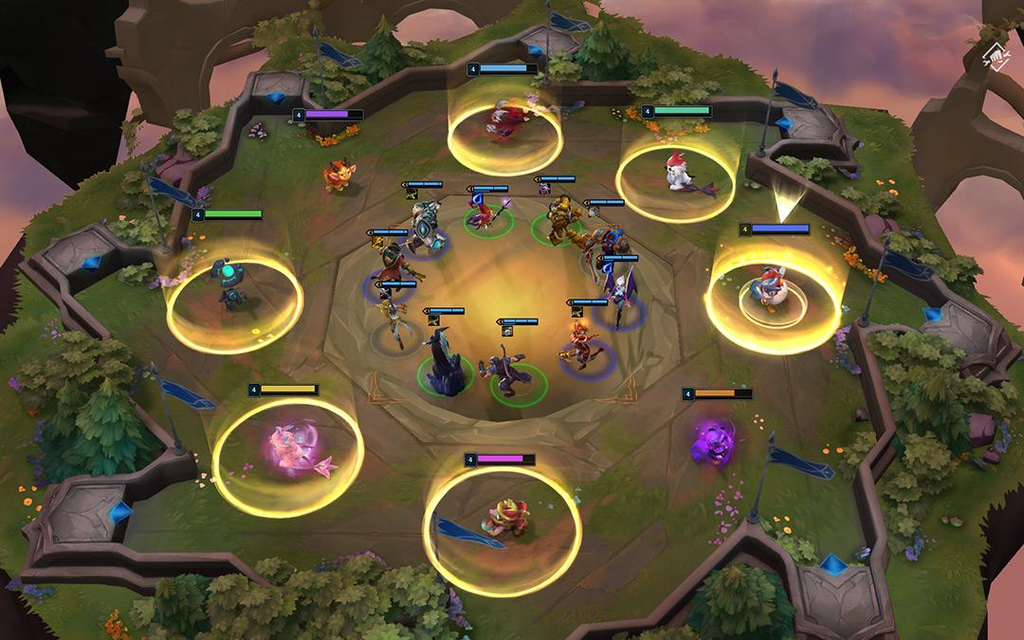
Large fights are often the most visually dramatic moments in a match. However, they are usually influenced by decisions made before the fight begins.
How Team Fights Start
Team fights can begin in several ways. One team may deliberately engage, catch an isolated player, contest an objective, or punish poor positioning. Many fights also begin because both teams are competing for control of the same area.
Frontline and Backline
Team compositions often contain frontline and backline champions. Frontline champions absorb pressure or start fights. Backline champions generally provide damage or utility from safer positions. Successful teams try to protect their key damage dealers while preventing the enemy from doing the same.
Positioning
Positioning can be more important than raw damage. A strong champion standing in the wrong place can be eliminated before contributing to a fight. Players constantly need to consider terrain, enemy abilities, escape routes, and the location of teammates.
Target Selection
Teams rarely attack every opponent equally. A vulnerable damage dealer may be a valuable target, but reaching that champion can be difficult if the enemy frontline provides protection. Good target selection therefore depends on both opportunity and team composition.
Common Match Strategies
League of Legends allows several broad strategic approaches. Most teams combine multiple styles rather than relying on only one.
Split Pushing
Split pushing involves sending one strong champion to pressure a side lane while teammates operate elsewhere. The goal is to force the enemy team to divide its attention. If several opponents respond to the split pusher, the rest of the team may gain an advantage around another objective.
Team-Fight Compositions
Some teams are built around strong five-player fights. These compositions usually perform best when champions group together and combine their abilities. Their strength depends heavily on positioning and coordination.
Pick Compositions
Pick strategies focus on catching isolated opponents. Teams using this style often rely on vision control, crowd control, and burst damage. Removing one enemy player before a major objective can create a significant numerical advantage.
Scaling Compositions
Scaling teams become stronger as the match progresses. They may accept a weaker early game in exchange for champions that perform better after gaining levels and items. The main challenge is surviving long enough to reach those stronger stages.
Early-Game Pressure
Other compositions are strongest early. They may use aggressive lanes, strong junglers, or early objective control to build an advantage before the opponent has time to scale. If they fail to create enough pressure, their relative strength may decline later.
Solo Queue vs Professional League of Legends Matches
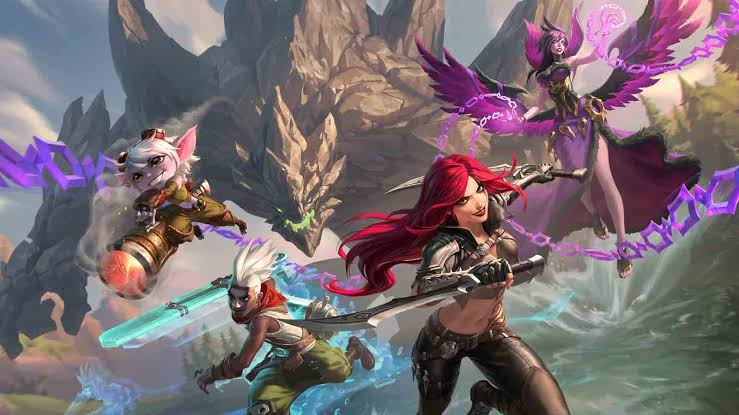
Ranked solo queue and professional competition use the same basic rules, but the way matches are played can differ significantly.
Communication
Professional teams communicate continuously. Players share information about enemy positions, ability cooldowns, wave states, and objectives. Solo queue teams usually have much less coordination, so individual decisions can be harder to synchronize.
Draft Strategy
Professional drafting is more structured. Teams study opponent preferences, prepare champion combinations, and plan how the composition should function at different stages of the match. In solo queue, picks are often influenced more strongly by individual comfort.
Objective Control
Professional teams usually plan around major objectives well in advance. They may begin pushing nearby lanes and controlling vision long before Dragon or Baron appears. This preparation can be more important than the fight around the objective itself.
Pace and Risk
Professional teams tend to avoid unnecessary risks. A quiet period does not mean nothing is happening. Players may be managing waves, setting vision, tracking opponents, or preparing the next move. This is one reason professional matches can sometimes appear slower than ranked games.
How Professional League of Legends Matches Are Organized
Competitive League of Legends uses several series formats. The format influences how much teams can adapt between games.
Best-of-One Matches
A best-of-one consists of a single game. The result is immediate, which can make preparation especially important. There is little opportunity to adjust after seeing how the opponent plays.
Best-of-Three Series
A best-of-three is won by the first team to take two games. This allows teams to adapt between matches. Champion priorities, bans, lane strategies, and overall game plans can all change after the first game.
Best-of-Five Series
A best-of-five requires three wins. These series are commonly associated with important playoff stages and major tournaments. The longer format rewards adaptation and gives teams more opportunities to respond to an opponent’s strategy.
Draft Changes Between Games
Drafts rarely stay identical throughout a series. A champion that performs well may be banned in the next game. A team may also change strategy after identifying a weakness. This creates a strategic layer that exists outside the individual matches.
What to Watch During a League of Legends Match
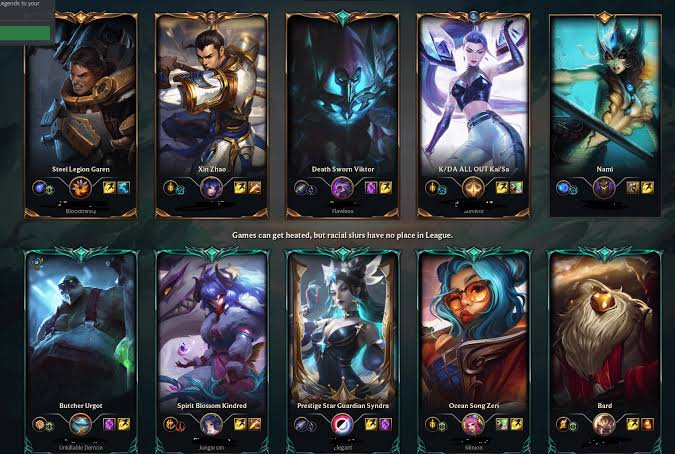
New viewers often focus on kills because they are easy to understand. Several other indicators can provide a clearer picture of which team currently has an advantage.
Gold Difference
Gold reflects overall access to items. A team with more gold can usually buy stronger equipment. However, the distribution of that gold also matters. A large advantage concentrated on one important carry may have a different impact from the same amount spread evenly across the team.
Objective Control
Dragons, towers, inhibitors, and Baron all influence the map. A team can have fewer kills and still be in a strong position if it controls more important objectives.
Vision and Map Position
Vision determines how safely players can move. A team that controls an area around Baron or Dragon can make it difficult for opponents to enter without taking risks. Map position can therefore create pressure even before a fight begins.
Item and Level Advantages
Checking completed items and champion levels can provide more useful information than looking only at kills. A player who has reached a major item spike may suddenly become much more influential.
Team Composition
Some teams are designed to win early. Others become stronger later. This means the same gold difference can have different implications depending on the champions involved.
Common Terms Used in League of Legends Matches
League of Legends has many common terms. A gank is a surprise attack from another part of the map. A roam is when a player leaves their lane to help somewhere else. CS means the number of minions a player has killed. A wave is a group of minions moving down a lane. A freeze keeps the wave in one area. A push moves it toward the enemy side. An engage starts a fight. Peel means protecting an important teammate. A pick is catching an isolated enemy. A reset usually means returning to base to heal and buy items. Scaling means getting stronger with more levels and items. A power spike is a point when a champion becomes much stronger. Vision control means using wards and removing enemy vision. Knowing these terms makes matches and commentary easier to understand.
Common Misunderstandings About League of Legends Matches
“The Team With More Kills Is Always Winning”
Kills are useful, but they are not the win condition. A team with fewer kills may still have more gold, better scaling, stronger objectives, or superior map control. The important question is how each team uses the advantages it creates.
“One Player Can Always Carry the Match”
A very strong individual performance can have a major impact. However, League of Legends is still a team game. Objectives, vision, composition, and coordination can limit how much one player can accomplish alone.
“Early Leads Guarantee Victory”
Early advantages are valuable but not permanent. A team can lose its lead through poor positioning, failed objective attempts, or unsuccessful team fights. Late-game death timers make mistakes especially expensive.
“Professional Matches Are Just Faster Ranked Games”
Professional play is not simply ranked play with better mechanics. Draft preparation, communication, wave management, vision planning, and objective timing are much more structured. The difference is strategic as well as mechanical.
Why League of Legends Matches Can Be Difficult to Follow
New viewers often struggle because many events happen at the same time.
Many Events Happen at Once
One player may be fighting in top lane while another team prepares Dragon and a jungler moves through enemy territory. The broadcast can only show one part of the map at a time. Understanding the minimap helps connect these separate events.
Hidden Information
Players operate under fog of war. They cannot see opponents unless they have vision of that area. Spectators usually have access to more information than the players, which means a decision may look obvious to the viewer even though the team did not have the same information.
Champion Knowledge
League of Legends contains many champions with different abilities. A viewer does not need to memorize every ability immediately, but basic familiarity makes fights much easier to understand. It becomes easier to recognize which champions want to engage, which need protection, and which are strongest at particular stages.
Patch Changes
League of Legends changes through regular balance updates. Champion strength, item efficiency, and strategic priorities can shift over time. This is why professional metas can change even though the core structure of the game remains the same.
How to Understand League of Legends Matches More Easily
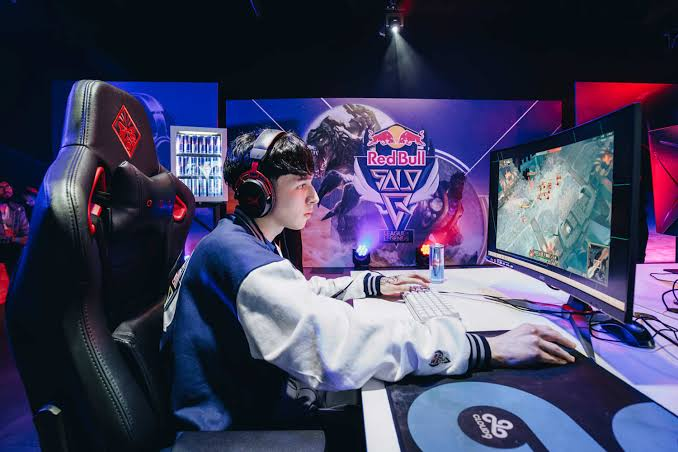
New viewers do not need to understand every ability or item immediately. A better approach is to start with the larger structure. First, identify which champion is playing each role. Then watch the minimap and notice when players leave their lanes. Pay attention to major objectives and ask why teams are moving toward particular areas of the map. Gold difference is also useful because it gives a simple overview of resource advantage. Over time, champion abilities, item choices, wave management, and more advanced strategies become easier to recognize. The key is to understand the purpose of each action rather than trying to memorize everything at once.
Conclusion
League of Legends is about more than fights. Teams manage gold, roles, objectives, vision, map control, timing, and positioning. Kills can help, but they are not enough on their own. Teams must use those chances to take towers, Dragons, Baron, inhibitors, and map pressure. Pro matches also include drafting, team communication, and careful planning. Once you understand the five roles, game phases, and main objectives, matches become much easier to follow.
FAQ About League of Legends Matches
- How long does a League of Legends match last?
There is no fixed match length. Some games end relatively quickly, while closely contested matches can continue much longer. Duration depends on team strength, strategy, objectives, and how easily one side can convert an advantage into the final push.
- How many players are in a League of Legends match?
A standard League of Legends match has ten players. Two teams of five compete against each other on Summoner’s Rift.
- What is the main objective in League of Legends?
The main goal is to destroy the enemy Nexus. Kills and objectives help teams reach that goal but are not the final win condition themselves.
- What are the five roles in League of Legends?
The standard roles are top lane, jungle, mid lane, AD Carry, and support. Each role has different responsibilities during the early game and later team fights.
- Why are Dragons important in LoL matches?
Dragons provide team-wide advantages and can influence long-term strategy. Teams often organize their vision, wave control, and positioning around upcoming Dragon fights.
- What does Baron Nashor do?
Defeating Baron Nashor gives the team a temporary buff that helps with pushing lanes and strengthening nearby minions. This can make it easier to break enemy defenses.
- Can a team win with fewer kills?
Yes. A team can have fewer kills but more gold, stronger objectives, better scaling, or superior map control. The match is decided by destroying the Nexus, not by kill count.
- What is the difference between solo queue and professional matches?
Professional matches generally involve more coordinated communication, structured drafting, planned objective control, and disciplined risk management. Solo queue games usually depend more heavily on individual decisions and limited communication.
- What does best-of-five mean in League of Legends?
A best-of-five series is won by the first team to win three games. The format allows teams to adjust drafts and strategies between matches.
- What should beginners watch during a LoL match?
Beginners can focus on gold differences, towers, Dragons, Baron, champion roles, and the minimap. These elements often explain the overall state of a match better than individual kills alone.